The Silent Thief: How Inflation Is Draining Your Wallet (and How to Fight Back)
Reading time: 8 min
Have you noticed your grocery bill creeping higher, your rent going up, or even that occasional coffee quietly getting more expensive? That’s not just your imagination.
That’s inflation in action — and it’s not just a term economists toss around.
It’s something that affects every single one of us, every single day.
Inflation is the reason your money doesn’t stretch like it used to. It’s why a cart of groceries costs more than it did last year, and why your raise at work somehow doesn’t feel like a raise at all.
Let’s break it down.
Inflation is the general rise in the prices of goods and services over time. In other words, the value of money drops. What you could buy for 1,000 ISK five years ago might now cost you 1,300 ISK. The increase may feel small from month to month, but over time, it adds up.
Inflation is usually measured by the Consumer Price Index (CPI), which tracks how the prices of everyday items like food, rent, fuel, and clothing change over time.
In Iceland, Statistics Iceland publishes this data regularly. In 2022, the CPI showed an annual inflation rate of 9.9% — the highest we’ve seen since the 2008 financial crisis.
But inflation isn’t always this extreme. In fact, a moderate amount of inflation — say 2% per year — is normal and even healthy for the economy. It encourages people to spend and invest rather than hoard cash.
Problems arise when inflation is too high, too low, or when it swings unpredictably.
Sometimes inflation slows down. That’s called disinflation. This doesn’t mean prices are falling — it just means they’re rising more slowly. For example, if inflation drops from 9% to 5%, that’s disinflation. You’re still paying more than last year, but the increase isn’t as sharp.
Then there’s deflation, which is the opposite of inflation — when prices actually fall. At first glance, this might sound like a good thing (who doesn’t want cheaper prices?), but deflation can be dangerous.
When people expect prices to fall, they delay purchases. Businesses make less money, lay off workers, and the economy can spiral downward. Japan, for example, experienced years of deflation that hurt economic growth.
Now, here’s a particularly nasty combo: stagflation. It’s when inflation is high, but the economy isn’t growing, and unemployment is also high. This creates a brutal situation where things cost more, but people have less income — and fewer job opportunities.
Stagflation is rare, but when it hits, it’s hard to manage. Central banks can’t easily raise interest rates to fight inflation because that would hurt growth and employment even more.
The term became widely known during the 1970s oil crisis, when prices skyrocketed while economies in many Western countries were stagnant. For regular people, stagflation means a cost-of-living crisis and a job crisis at the same time.
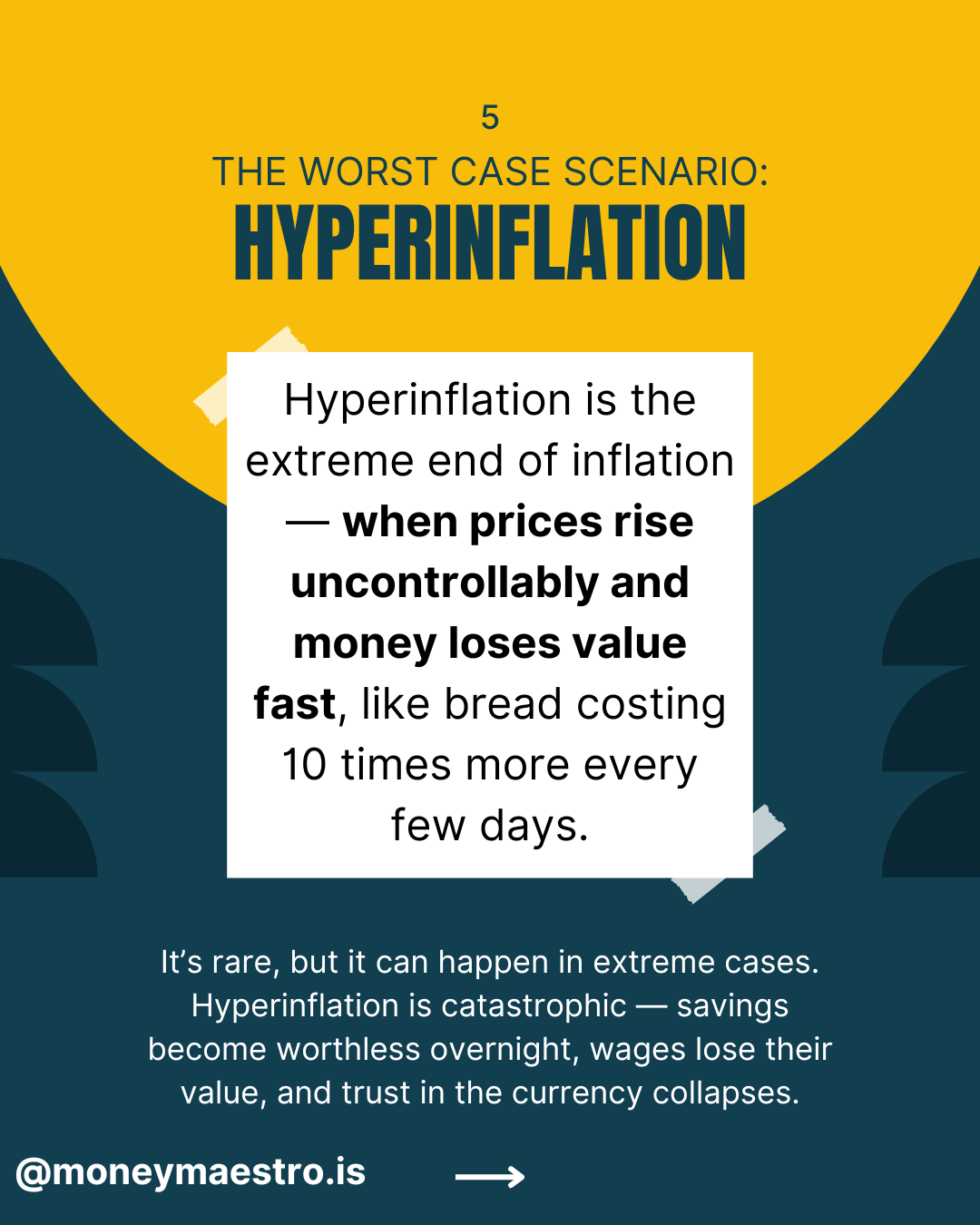
Hyperinflation is the extreme end of inflation — when prices rise uncontrollably and money loses its value at an alarming rate. We’re talking about things like bread costing 10 times more every few days. It’s rare, but it happens in extreme cases — usually when a country’s economy is in turmoil.
A classic example is Zimbabwe in the late 2000s, or Venezuela, where hyperinflation has made the bolívar nearly worthless — forcing people to carry bags of cash just to buy basic necessities.
For ordinary people, hyperinflation is catastrophic. Savings become worthless overnight, wages lose their value, and bartering for goods becomes common. Hyperinflation essentially destroys the trust people have in their own currency, bringing the economy to a grinding halt.
Inflation doesn’t always show up as a higher price tag. Sometimes, companies shrink the product instead. That’s called shrinkflation.
You might still be paying 349 ISK for a chocolate bar — but if it used to weigh 100g and now only weighs 85g, you’re paying more for less. It’s subtle and easy to miss, which is exactly why companies do it. It allows them to raise prices without technically raising prices.
Toblerone is a classic example of shrinkflation — where the product shrinks but the price stays the same. In 2016, the company reduced the weight of its iconic chocolate bar by widening the gaps between the signature peaks, citing rising ingredient costs.
Consumers were quick to notice and felt misled, highlighting how brands can quietly reduce value without lowering the price.
This is why people should stay alert: shrinkflation is a subtle form of inflation that affects your purchasing power without you even realizing it. Always check product size and weight, not just the price tag.
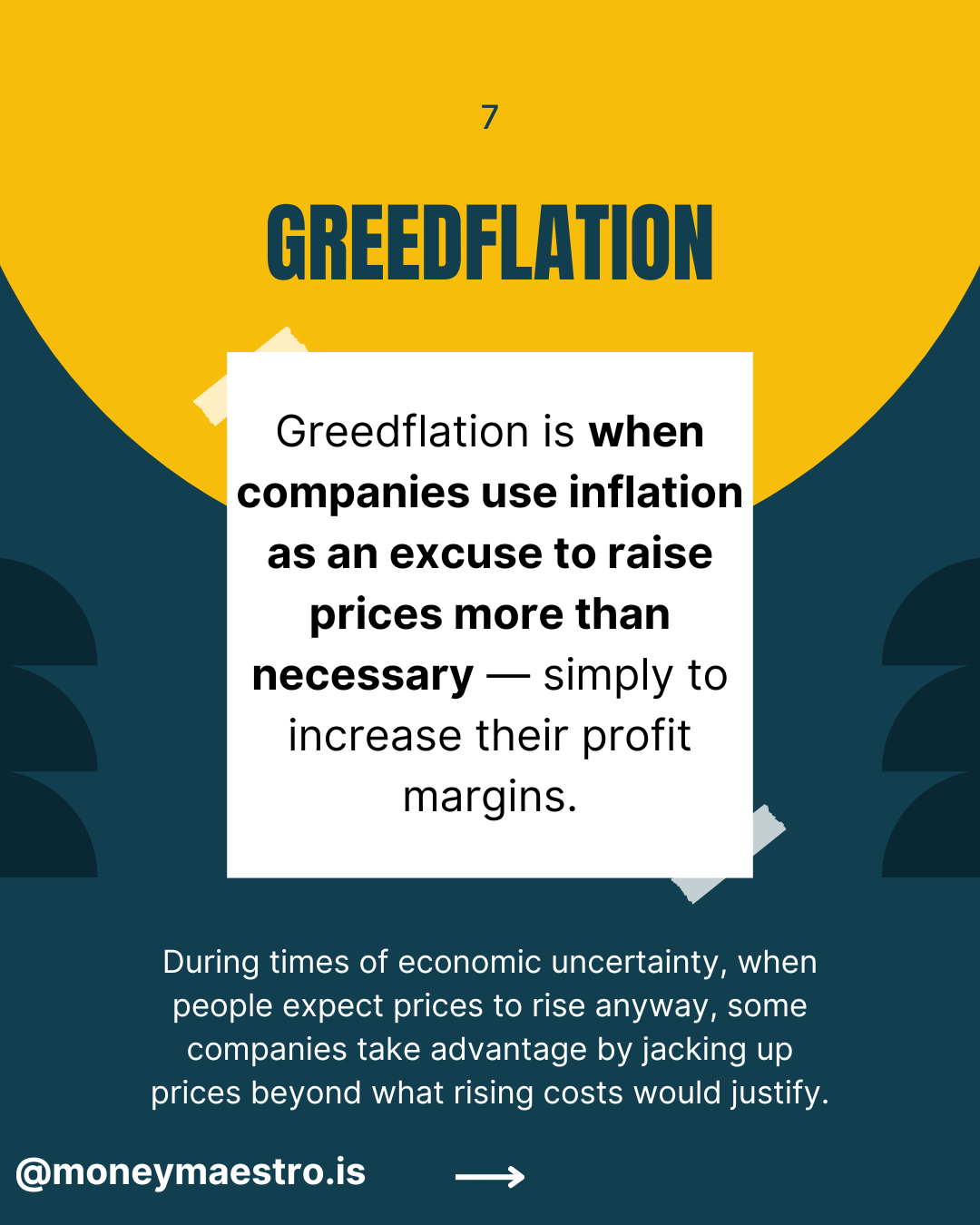
Then there’s greedflation. This is when companies use inflation as an excuse to raise prices more than necessary — simply to increase their profit margins.
During times of economic uncertainty, when people expect prices to rise anyway, some companies take advantage by jacking up prices beyond what rising costs would justify.
According to data from the European Central Bank, profit margins in some industries even increased during recent inflation spikes — suggesting businesses weren’t just protecting themselves; they were taking more.
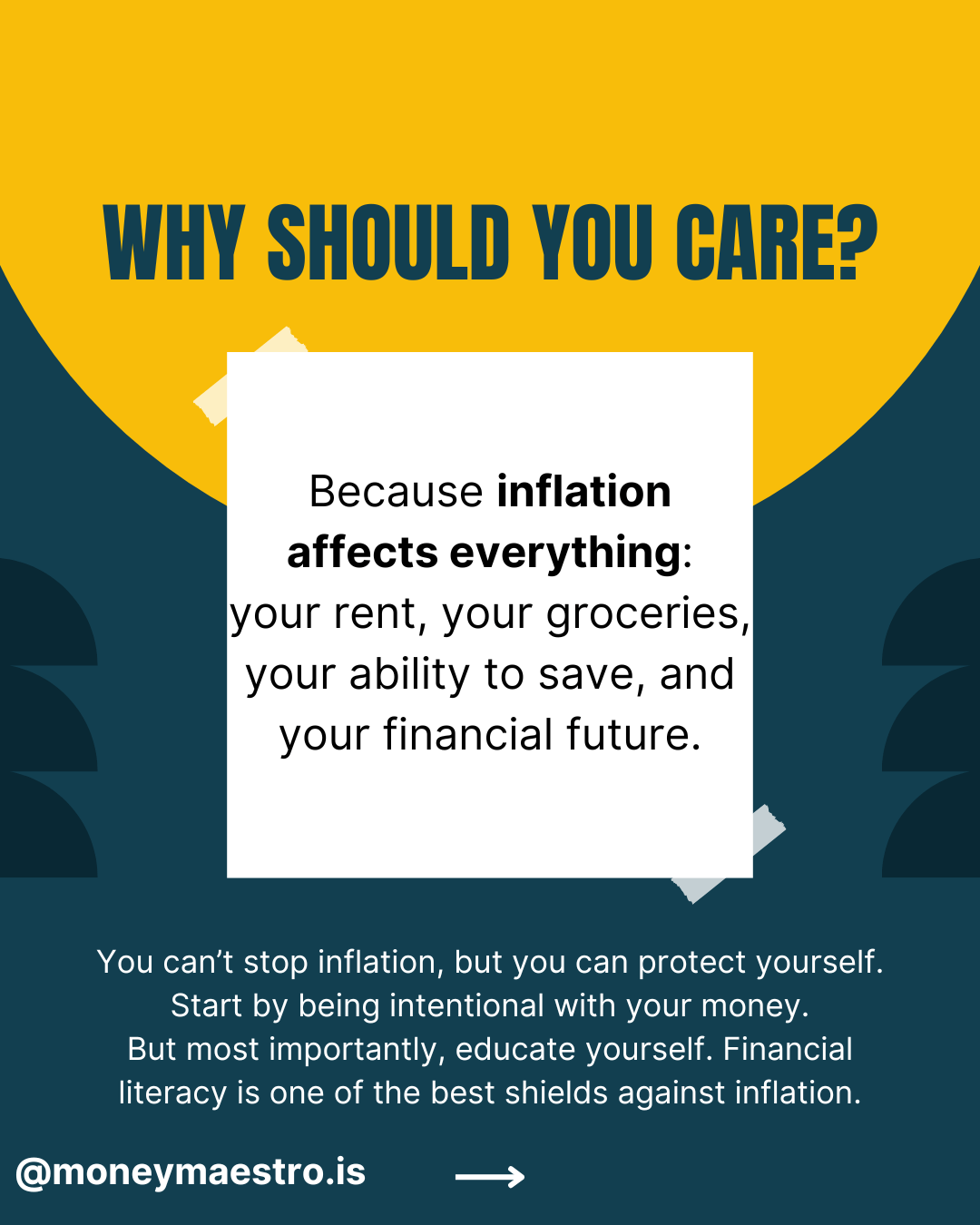
Because inflation affects everything: your rent, your groceries, your ability to save, and your financial future.
Let’s say you make 500,000 ISK a month. If inflation is 10%, then next year, you’ll need 550,000 ISK just to live the same lifestyle. If your salary doesn’t increase by that amount, you’re effectively getting poorer — even if you got a raise on paper.
This is where the concept of “wage theft through inflation” comes in. It’s not that someone is directly taking your money — it’s that rising prices silently reduce the value of your income. You work the same job, maybe even harder, but you can afford less.
That’s why inflation is often called the silent tax. You don’t see it deducted from your paycheck, but it quietly chips away at your financial well-being.
Inflation hits hardest where it matters most — your essentials. Food, housing, transport, utilities. You can skip fancy dinners, but you can’t skip your rent or your heating bill.
Inflation eats away at savings. If inflation is 8% and your savings account earns just 3% interest, you’re losing 5% of your money’s value every year.
Inflation increases inequality. People with investments, real estate, or other assets often benefit during inflation because those things go up in value. But for people living paycheck to paycheck, inflation means less room to breathe, less ability to save, and more financial stress.
Inflation delays goals. Want to buy a house? Inflation pushes up property prices and interest rates. Want to start a family? Even diapers and daycare cost more. Inflation doesn’t just affect your wallet — it affects your timeline.
You can’t stop inflation, but you can protect yourself.
Start by being intentional with your money.
Don’t let it sit idle in a regular savings account. In times of high inflation, that’s like watching it melt. Look into high-interest accounts or inflation-beating investments like index funds, stocks, or real estate — depending on your goals and risk tolerance.
If you have debt, try to lock in fixed interest rates before they rise. When inflation is high, central banks raise interest rates to cool it down, which makes borrowing more expensive.
Also, make a habit of tracking your expenses. Knowing where your money goes helps you identify waste and redirect spending toward things that matter. You don’t have to live like a monk — but being conscious is powerful.
And if you can, diversify your income. A small freelance gig, side hustle, or passive income stream can make a big difference if your main job isn’t keeping pace with rising costs.
Most importantly, educate yourself. Financial literacy is one of the best shields against inflation. The more you understand how money works, the harder it is for rising prices — or greedy corporations — to catch you off guard.
Inflation is real. It’s happening all around us, every day. It’s not just about numbers or economics — it’s about your life, your choices, and your future.
But knowledge is power. When you understand inflation — and how to spot its sneaky cousins like shrinkflation or greedflation — you stop being a passive victim and start becoming an active manager of your money.
Here at MoneyMaestro.is, I believe everyone deserves to understand how money works.
Not just the wealthy.
Not just the experts.
Everyone.
Because your financial future shouldn’t be a guessing game. And your paycheck should be enough to live — not just survive.
A simplified version of the article, presented in slides: